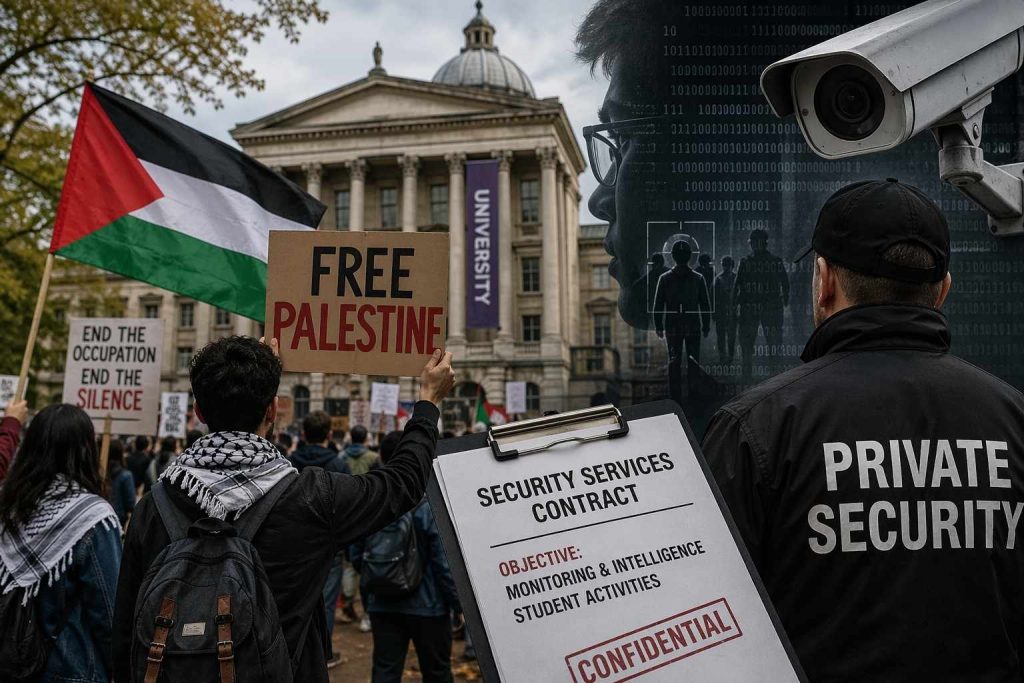

Recent reports have stirred controversy across the UK, revealing that several British universities allegedly hired private security firms to monitor students involved in pro-Palestine activism. This has sparked a heated debate about academic freedom, privacy, and the role universities play in overseeing political expression on campus.
Investigations by journalists and civil rights groups suggest these security firms tracked protests, gathered information on student organizers, and assessed what universities called “potential risks” to campus safety. Critics argue this goes beyond security and amounts to surveillance aimed at a particular political viewpoint.
Universities defend their actions by pointing to concerns about campus disruptions and safety, especially as pro-Palestine demonstrations have grown more frequent amid rising conflicts in the Middle East. They say hiring external security is a precaution to prevent violence and keep order. However, no clear evidence has surfaced showing these protests posed serious threats that justify secret monitoring.
Student groups and human rights organizations strongly condemn this practice. They warn that spying on peaceful activism undermines the core values of higher education, which should promote open debate and critical thinking. Many students now worry that their political involvement could be tracked and used against them academically or professionally.
Legal experts raise additional concerns about data privacy. If universities collected personal details without informing students, they might be breaking UK data protection laws like the GDPR. The lack of transparency only deepens mistrust.
This controversy highlights a global trend of institutions relying more on surveillance to manage dissent. From facial recognition to social media monitoring, the boundary between safety and free speech suppression is blurring. This tension is especially important at universities, traditionally hubs of activism and social change.
Calls are growing for independent investigations and stricter rules on how universities handle student protests. Advocacy groups demand clear policies to protect students’ rights to organize and express political views without fear of surveillance or retaliation.
At the heart of the issue lies a crucial question: should universities remain neutral spaces for free intellectual exchange, or are they becoming extensions of wider security forces prioritizing control over freedom? How this challenge is addressed will shape the future of student activism and the integrity of academic life in the UK.